
Nine Quiet Signs a Parent Needs Help at Home
It's rarely a fall or a crisis that tells you first. It's the small things you notice on a visit and talk yourself out of.
September 14, 2026 · 2 min read
Most families do not arrive at home care after a dramatic event. They arrive after months of small observations that quietly added up — each one easy to explain away on its own.
Here is what to actually look for.
In the house
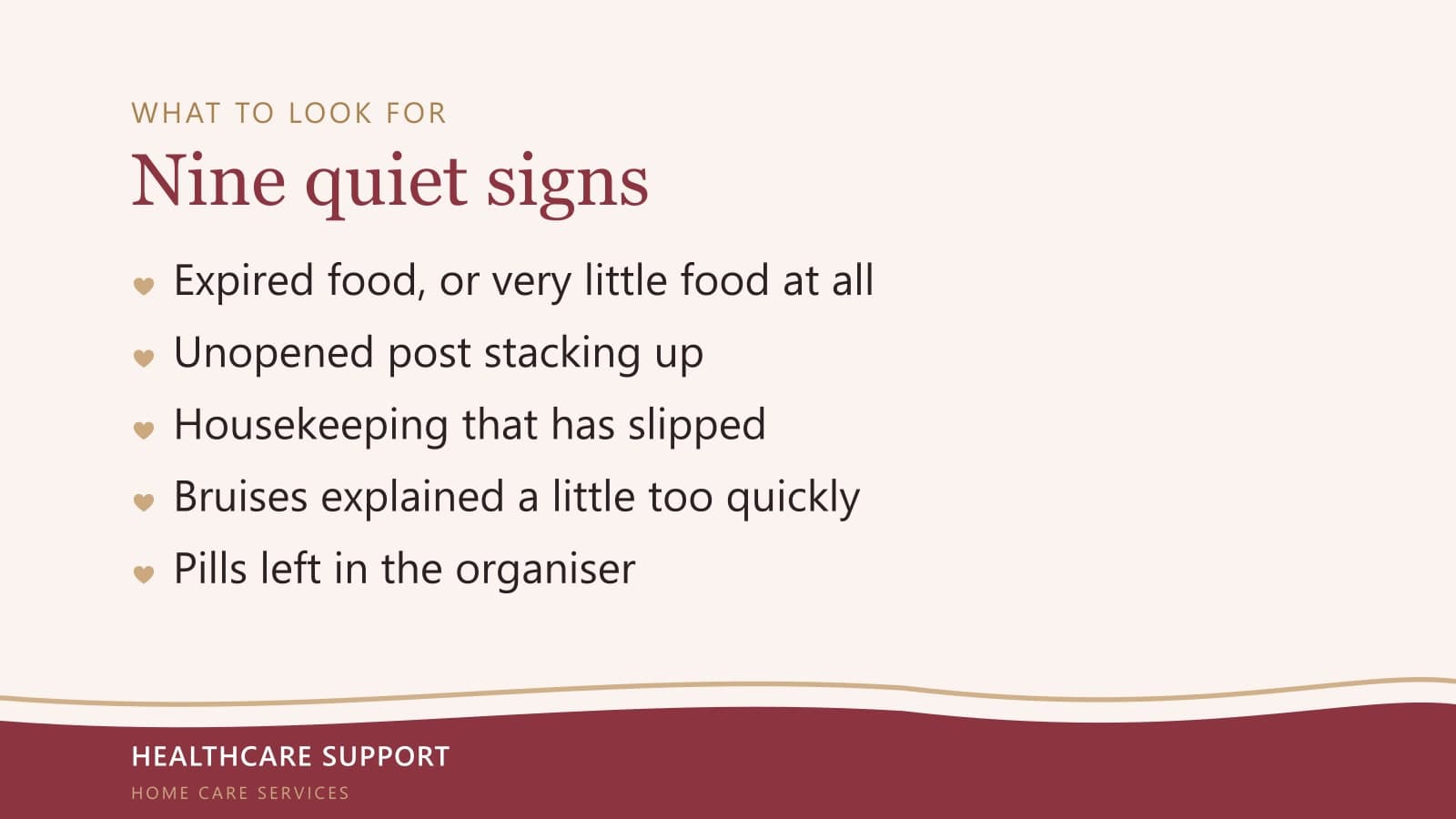
- The fridge. Expired food, very little food, or a lot of the same easy thing. Cooking is one of the first activities to quietly stop.
- The post. Unopened envelopes stacking up, particularly bills. Managing paperwork takes more executive function than people realise.
- Housekeeping that has slipped. Not untidiness — a change from how they have always kept things. That change is the signal, not the standard.
- Bathroom safety. No grab rails, a slippery tub, a towel rail being used to pull up on. People adapt silently rather than ask.
In the person
- Weight change. Clothes hanging differently. Often the first visible consequence of meals being skipped.
- Wearing the same clothes. Bathing and dressing take effort and confidence. Repeating an outfit can mean the shower has become frightening.
- Bruises they cannot explain. Or explain a little too quickly. Falls are massively under-reported, because reporting one feels like an argument for losing independence.
- Withdrawing. Missing church, dropping a standing lunch, letting the phone go. Sometimes low mood; sometimes embarrassment about mobility or continence.
- Medication muddle. Pills left in the organiser, doubled doses, or refills that have not been collected.
The conversation nobody wants
When you do raise it, the instinct is to lead with safety. Try not to. "I am worried you will fall" is heard as "I think you cannot cope," and it puts a proud person straight on the defensive.
What tends to work better is framing help as something that protects independence rather than removes it:
"I would love for you to stay in this house for as long as you want to. Let's get a bit of help in so that stays possible."
Start small. A few hours a week for the shopping and a shower. It is much easier to add hours to a caregiver someone already likes than to introduce full-time care to someone who never agreed to any.
Then look at how it gets paid for
Many families assume in-home care is entirely out of pocket. Often it is not. If your parent has Medicaid, they may qualify for Georgia's Elderly & Disabled Waiver Program, which pays for exactly this kind of support at home.
It takes two minutes to find out.
Wondering whether the Medicaid waiver could cover care for your family?
Check in two minutes